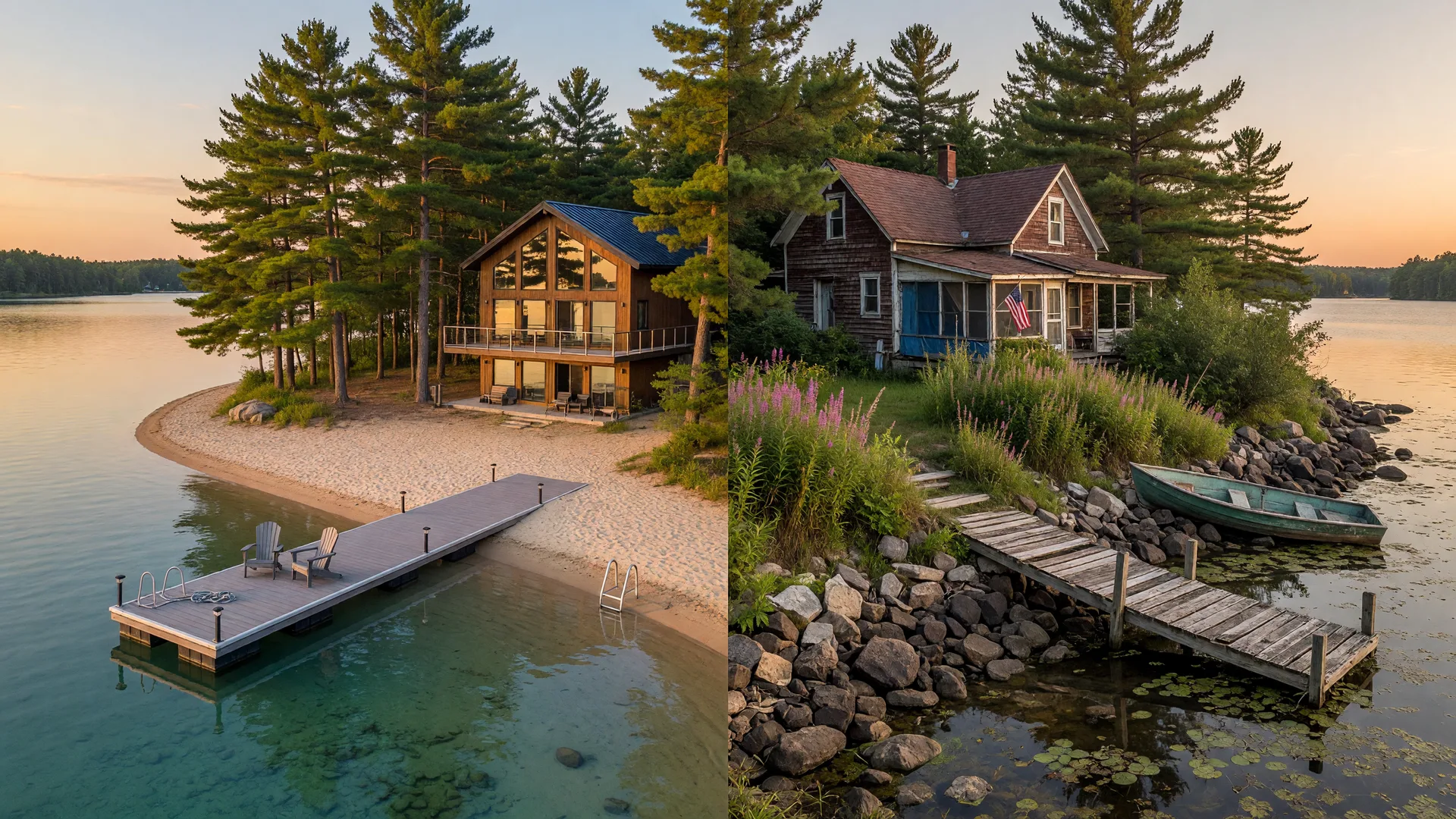
This is the first question I ask every buyer, and it is the most important one to get right. The lake you choose affects everything: how you spend your weekends, what your property will be worth in ten years, how much maintenance you take on, and how easy it is to sell when the time comes.
Not all lakes in the Brainerd Lakes Area are equal. They differ in water quality, boating access, privacy, price, year-round livability, and long-term value. Here is how to think through the decision.
Start with How You Will Use the Property
Before comparing lakes, get honest about how you plan to use the property. Your answer determines which lake characteristics matter most.
- • Full-time residence: You need year-round access, reliable services, good schools nearby, and a community that stays active in winter.
- • Weekend retreat: Privacy and proximity matter more than year-round infrastructure. A quieter lake with less boat traffic might suit you better.
- • Seasonal cabin: Seasonal access and lower purchase price can be appealing, but understand what winterization and reduced access mean.
- • Retirement home: Think about accessibility, medical services, airport proximity, and social connection. A level lot with easy water access matters more as you age.
- • Multi-generational gathering place: You need space for guests, good swimming, and enough lake activity to keep everyone entertained.
The Major Lake Categories
In the Brainerd Lakes Area, lakes generally fall into a few categories. Each has trade-offs.
Large recreational lakes (Gull Lake, Whitefish Chain, Pelican Lake, North Long Lake)
- • Best for boating, fishing, and water sports
- • Higher property values and stronger long-term appreciation
- • More boat traffic on summer weekends
- • More amenities and services nearby
Medium-sized lakes with good access (Roosevelt, Clark, Sylvan, Bay, Edwards)
- • Good balance of recreation and privacy
- • Generally more affordable than the large destination lakes
- • Less boat traffic but still good water quality
Smaller, quieter lakes (various)
- • Maximum privacy and peace
- • Limited boating (often no-wake or restricted motor size)
- • May have lower resale demand depending on the specific lake
- • Often the best value for buyers on a budget who still want lake access
The Factors That Actually Matter
Water clarity. Some lakes have clear, sandy-bottom water that stays swimmable all summer. Others are shallower, darker, or more prone to algae. Water clarity affects both enjoyment and property value. The DNR publishes water clarity data for most Minnesota lakes.
Lake size and depth. Larger, deeper lakes hold cooler water and maintain better water quality. They also support more recreation. But they attract more people. Decide which matters more.
Shoreline composition. Sand shoreline is the gold standard. Rocky shoreline can be beautiful but limits swimming. Mucky shoreline is a red flag. I almost never recommend buying a property with poor shoreline unless the price reflects a significant discount and you have a realistic plan for improvement.
Exposure and views. Southwest-facing shoreline gets the best sunset views and more afternoon light. North-facing shoreline stays cooler and may have less direct sun. Exposure affects how much you use the dock, deck, and outdoor spaces.
Access. Is the property accessible year-round? Is the road maintained in winter? Is the lake accessible for boat launching? These practical considerations matter more than you might think.
Which Lakes Hold Value Best?
The lakes that hold value best share a few characteristics: good water quality, desirable shoreline, strong recreation, established communities, and steady buyer demand. Gull Lake, the Whitefish Chain, and Pelican Lake have historically shown the strongest appreciation and most consistent demand.
That does not mean smaller lakes are a bad investment. A well-chosen property on a smaller lake can hold value just as well if the shoreline is good and the property is positioned correctly. The key is understanding the specific lake's market, not relying on generalizations.
"The house can be changed. The lake usually cannot. Choose the lake first, then find the right property on it."
My Advice
Spend time on the lakes you are considering. Visit on a busy summer weekend and on a quiet weekday. Talk to neighbors. Check DNR data. Work with someone who knows the specific lakes well enough to compare them honestly.
And do not rush. The right lake for your family is worth waiting for. Buying on the wrong lake is one of the most expensive mistakes you can make.

Noah Goedker
Realtor · Elevate Group · eXp Realty
Third-generation Brainerd Lakes Area real estate agent. I help lake-home buyers choose the right lake and avoid expensive mistakes.